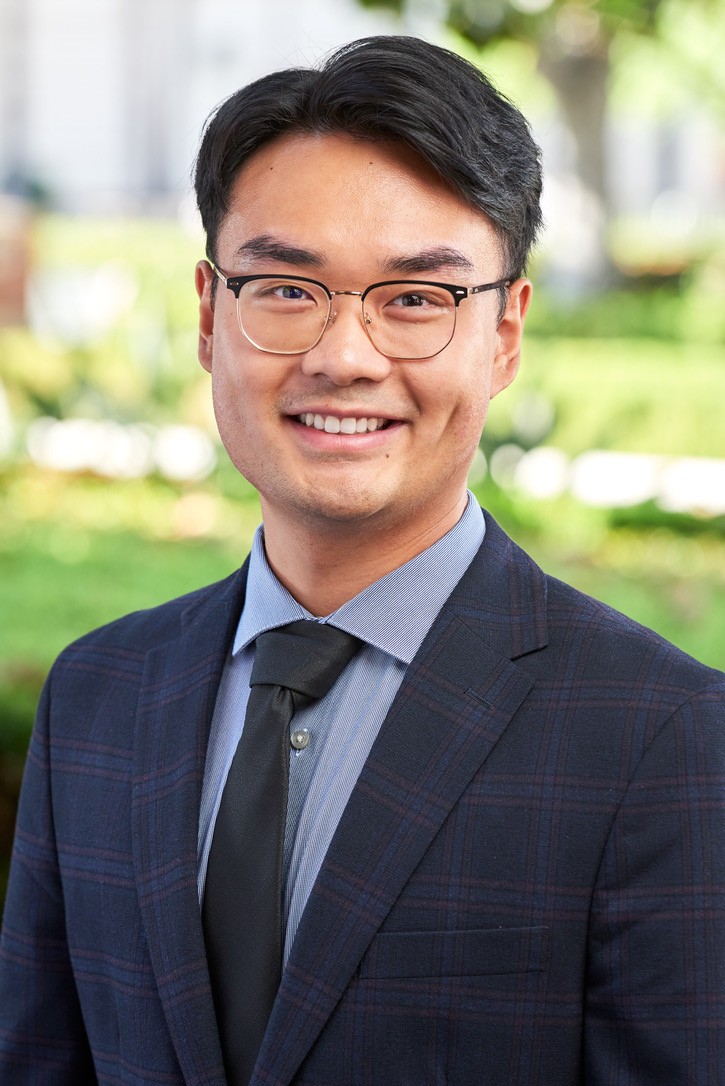
About me
I am a Ph.D. student at Carnegie Mellon University, advised by Prof. Shixiang Zhu and Prof. Holly Wiberg. My research develops statistical and optimization methods for reliable decision-making under uncertainty.
Before joining Carnegie Mellon, I received an M.S. in Statistics from the University of Southern California, where I worked with Prof. Paromita Dubey on change-point detection for metric-space data. I also earned an M.S. in Statistics from the University of Wisconsin–Madison, where I worked with Prof. Kris Sankaran and Prof. Keith Levin on machine-learning interpretability and statistical network analysis. I earned a B.S. in Statistics and a B.S. in Applied Mathematics from Renmin University of China.
Research interests
- Uncertainty quantification and conformal prediction
- Statistical inference and hypothesis testing
- Decision-focused learning and stochastic optimization
Recent work
Generative Conformal Prediction with Optimized Coverage Allocation
Accepted to NeurIPS 2026Conference paper
Current citable version: arXiv:2410.13735 (earlier title)
ORCA ranks samples from a generative model by local density, optimizes rank-specific radii, and calibrates the resulting prediction regions for finite-sample marginal coverage.
Beyond Predicting Responses: Conformal Inference for Latent Distributional Parameters
PreprintarXiv · 2026
We introduce LatentCP, a prior-free framework that constructs uncertainty sets for unobserved, instance-specific distributional parameters using only observed context–response pairs and a specified forward model. It provides finite-sample marginal coverage without latent calibration labels or knowledge of the latent mixing distribution, with an application to latent wildfire intensity.
Learning to Test: Physics-Informed Representation for Dynamical Instability Detection
PreprintarXiv · 2026
We develop a test-oriented, physics-informed representation for monitoring dynamical systems under changing operating conditions. The method converts deployment-time safety monitoring into a distributional hypothesis test with controlled Type I error, avoiding repeated large-scale simulation.
Change Point Inference for Non-Euclidean Data Sequences using Distance Profiles
PreprintarXiv · revised 2026
We develop a tuning-parameter-free scan statistic for detecting and locating distributional changes in metric-space data. The method has asymptotic guarantees and applies broadly to objects such as distributions and networks when pairwise distances are available.
See the publications page for a complete list and Google Scholar for citation records. For research correspondence, email minxingz@andrew.cmu.edu.